Westfield Specialty Insights
Westfield Specialty Insights is a podcast for brokers, risk managers, and commercial insurance buyers navigating the specialty market. Each episode unpacks a current industry trend - generative AI exposure in professional liability, the expanding reach of PFAS environmental claims, nuclear verdicts and the casualty rate environment, strategic cargo theft and the logistics insurance reset - and gives listeners a practical playbook for what to ask, what to buy, and what to watch for at renewal. Produced by Westfield Specialty. Episodes typically run 20 to 25 minutes.
All Episodes
AI & CRM Growth
In this episode of AI & CRM Growth Show, we explore the biggest reasons businesses struggle with AI adoption. Learn how disconnected systems, manual processes, poor data management, and lack of strategy prevent companies from successfully implementing AI. Discover practical ways to prepare your organization for scalable AI and CRM transformation using automation and smarter workflows.
The AI E&O Wave: When Algorithms Become the Defendant
Generative AI tools now sit inside the daily workflow of law firms, accounting practices, medical groups, financial advisors, and design firms. They draft, analyze, recommend - and occasionally hallucinate. In 2026, the Miscellaneous Professional Liability (MPL) market is seeing the first sustained wave of claims tied directly to AI-generated work product, and underwriters are recalibrating fast. In this episode: 00:00 - Cold open: a real (anonymized) AI hallucination claim scenario 02:30 - Why MPL is the policy form where AI exposure lives 06:00 - Which professions are seeing the steepest rate movement and why 10:15 - What underwriters are now asking on renewal applications 14:30 - The contract-language trap: when "human review" clauses do and don't help 18:00 - Broker playbook: 4 questions to ask every professional services client before bind 21:00 - Where Westfield sees the AI E&O market heading in the next 18 months Key takeaways: - AI exposure is not a separate policy. It lives in MPL today, and exclusions are starting to appear on renewals. - The professions most exposed are not always the obvious ones; downstream consulting and advisory work is a hotspot. - Documented human-in-the-loop processes are the single biggest underwriting differentiator right now. Related reading: The MPL Minute series at solutions.westfieldspecialty.com/insights Brokers can request a quote or talk to a Westfield Specialty MPL underwriter at solutions.westfieldspecialty.com.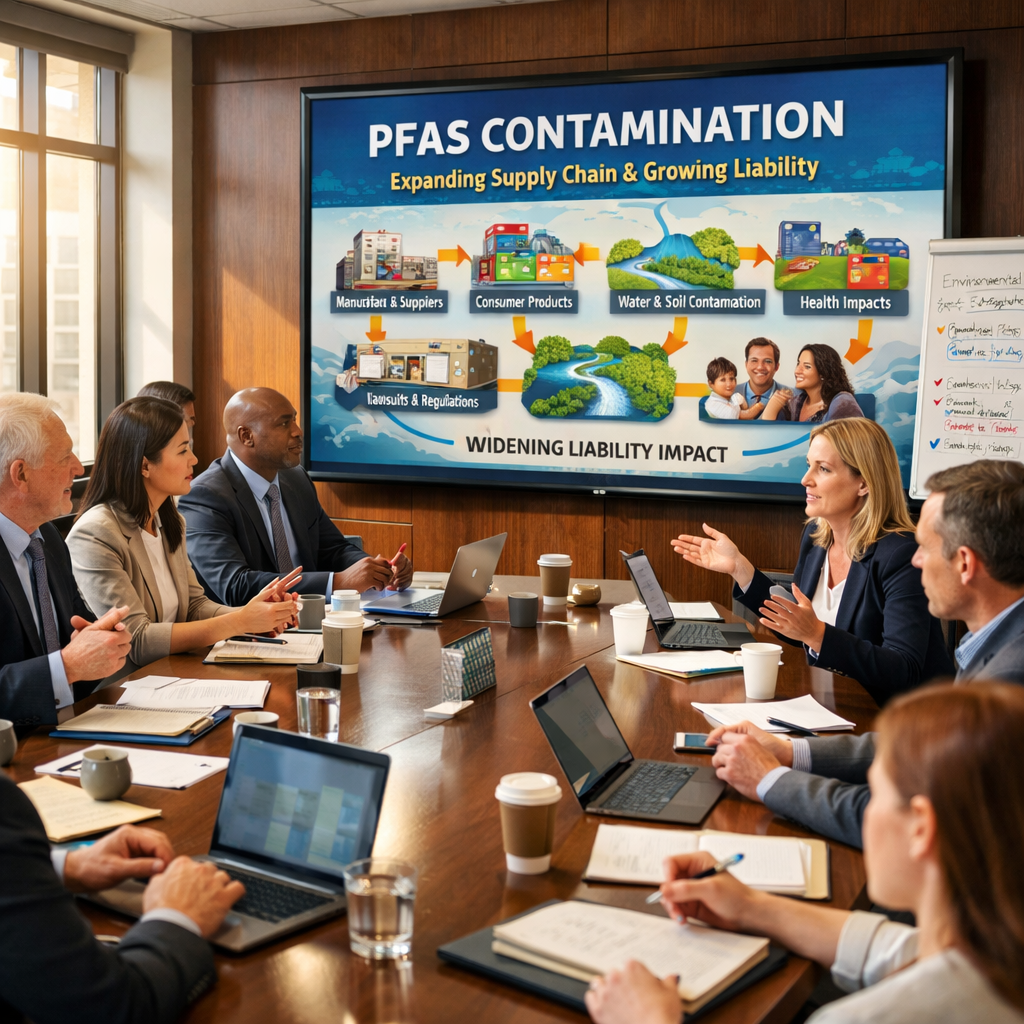
PFAS, Plastics & the Next Big Environmental Claim Cycle
The 3M and DuPont headline PFAS settlements were just the opening act. With the EPA's expanded CERCLA designations for PFOA and PFOS now in force, a much wider universe of secondary defendants - distributors, equipment manufacturers, commercial property owners, even municipal customers - are being pulled into long-tail litigation. Environmental liability policies written five and ten years ago are being read with fresh eyes by both sides. In this episode: 00:00 - Cold open: how a non-manufacturer ended up named in a PFAS suit 03:00 - The CERCLA reclassification, in plain English 07:30 - Why environmental policies written pre-2023 are being tested differently 12:00 - Pollution exclusions on standard CGL: what they actually do and don't do anymore 16:30 - Commercial real estate exposure: the part of the market underestimating this 20:30 - What's becoming standard on environmental applications in 2026 24:00 - Where the next chemical class (1,4-dioxane, microplastics) is heading Key takeaways: - PFAS is no longer a manufacturer-only story; distribution-chain and property-owner exposure is the growth area. - Standard CGL pollution exclusions are increasingly insufficient on their own. Dedicated environmental towers are the trend. - Underwriters are now asking detailed historical-use questions that buyers should prepare for months ahead of renewal. Related reading: The Environmental Edge series at solutions.westfieldspecialty.com/insights For environmental risk consultation, visit solutions.westfieldspecialty.com. The case scenarios discussed in this episode are illustrative and for educational purposes only. They do not constitute legal advice or a representation of coverage under any specific policy.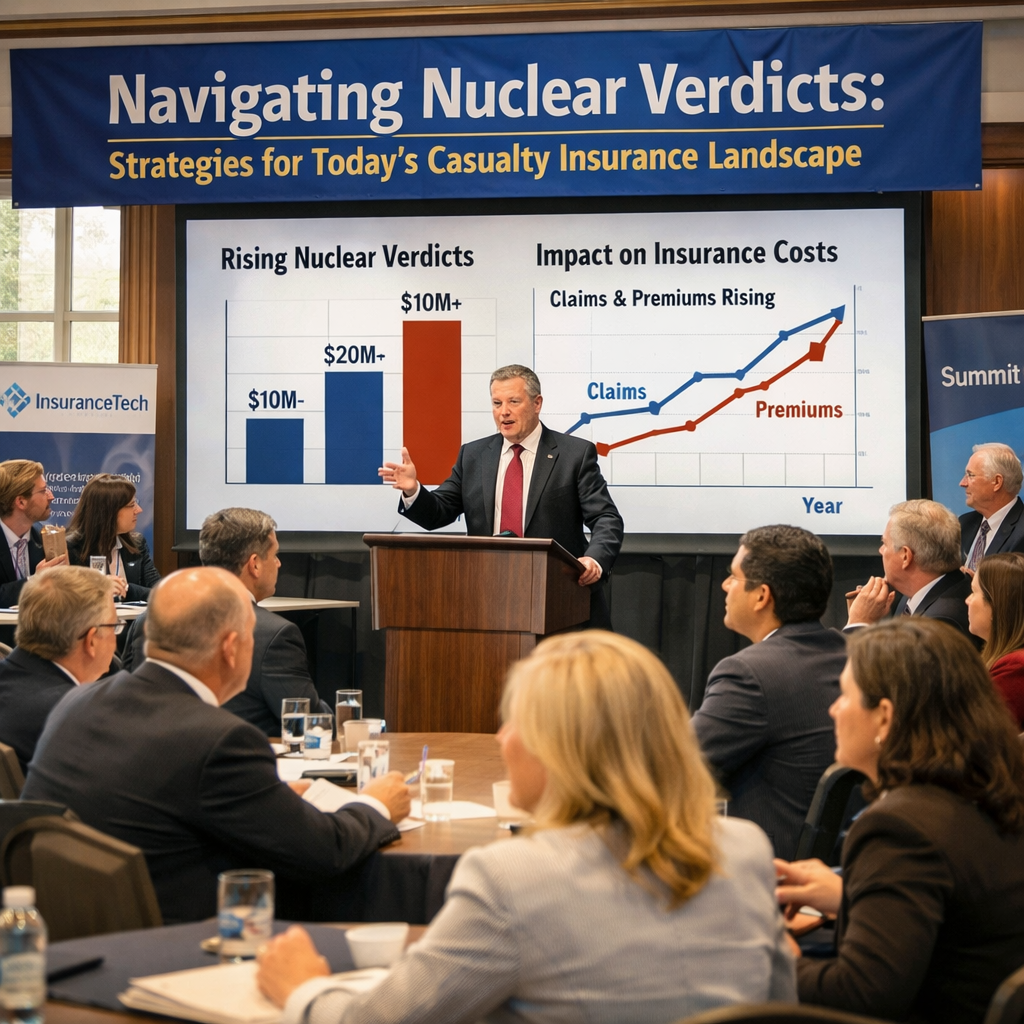
Nuclear Verdicts and the Death of the $1M Limit
A $10 million jury award used to be a story. In 2026, in several U.S. venues, it is a baseline. The combined pressure of social inflation, third-party litigation funding, and reptile-theory trial tactics has rewired what "adequate limits" means for commercial buyers - and the standard $1M CGL primary tower is increasingly the floor of a much taller stack. In this episode: 00:00 - Cold open: the verdict that changed how one fleet operator thought about limits 02:30 - What "nuclear" actually means: definitions and the trend data 06:00 - The four forces driving the trend: social inflation, litigation funding, reptile theory, anchoring 11:00 - The venues where this is happening (and where it isn't, yet) 15:00 - How umbrella and excess layers are being restructured in 2026 19:00 - What defense strategies are actually moving the needle in trial 22:30 - Buyer playbook: how to think about limits when your peer just took a nine-figure hit Key takeaways: - The historical "buy 2x your worst-case" heuristic is broken in casualty-heavy industries. - Litigation funding is now visible on the plaintiff side in a way that didn't exist five years ago and is structurally changing settlement dynamics. - Excess capacity is available but pricing and attachment points have moved meaningfully. Related reading: Westfield Specialty CGL and excess solutions at solutions.westfieldspecialty.com Brokers reviewing casualty towers can reach Westfield Specialty at solutions.westfieldspecialty.com. The verdict and claim scenarios discussed in this episode are illustrative and for educational purposes only. They do not constitute legal advice or a representation of coverage under any specific policy.