
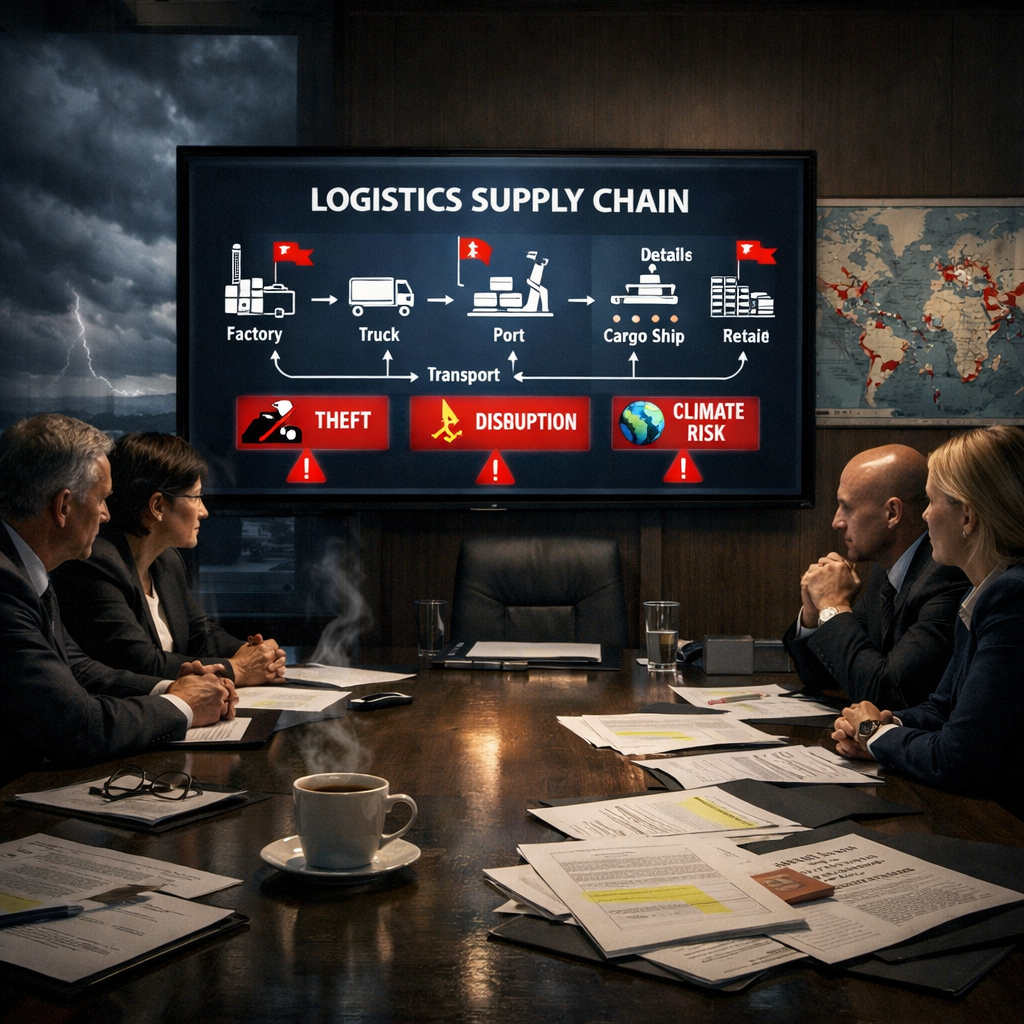
Cargo, Ports & Climate: The Logistics Insurance Reset
Westfield Specialty Insights
For logistics operators, the old playbook - stack a standard cargo policy, a motor truck cargo form, and warehouse legal liability, then call it covered - no longer matches the actual risk profile. Strategic cargo theft (organized, identity-driven, often digitally enabled) is up sharply. Red Sea and Panama Canal disruptions reshaped routing and dwell-time assumptions. Named storms are landing earlier and stronger each season. The result is a coverage stack with seams that didn't exist a few years ago.
In this episode:
00:00 - Cold open: a strategic theft case that exposed a coverage seam
03:00 - What "strategic" cargo theft actually means in 2026 (and why it's different from old-school in-transit theft)
07:00 - Route-disruption risk: dwell time, contingent business interruption, and where standard cargo forms fall short
11:30 - Climate and named-storm exposure for warehoused and in-transit goods
15:30 - The coverage gaps the market is exposing: fictitious pickup, identity fraud, deviation clauses
19:00 - Specialty wrappers and endorsements underwriters are building in response
22:00 - Buyer playbook: three questions every logistics operator should be asking at renewal
Key takeaways:
- Identity-driven cargo theft is the fastest-growing loss category and many standard forms exclude or sub-limit it.
- Contingent business interruption tied to route and port disruption is underbought across the logistics sector.
- Warehouse aggregation values have shifted faster than many policy schedules. Schedule reviews are overdue.
Related reading: Westfield Specialty logistics and transportation solutions at solutions.westfieldspecialty.com
Logistics brokers and operators can connect with a Westfield Specialty underwriter at solutions.westfieldspecialty.com.
Loading